Charles Schenck, an american socialist was giving out flyers telling men to avoid enlisting in the Great War. He believed that the draft was unconstitional for it violated the 13th amendment because it enforced “involuntary servitude” and due to the fact the war was motivated by “capitalist greed”. Schenck was arrested and charged with violating the new Espionage Act, claiming he was trying to incite insubordination in the military and naval forces. He appealed to the supreme court stating that the act when against the 1st amendment however Justice Oliver Wendell Homes disagreed. He wrote a pioneering piton that claimed that an inducible’s Freedom of Speech was not guaranteed when the speech would cause “clear and present danger”, which in his opinion Schenck did. The Supreme Court vote was unanimously against Schneck although the ruling has since been overturned.
Wednesday, February 11, 2015
Thursday, January 22, 2015
LAD #29: Keating-Owen Child Labor Act
The Keating-Owen Child Labor Act dint allow the sales of goods that were produced by children across the Sate border, it also limited the number of hours that a child could work. According to a Census near the beginning of the 20th century, about 2 million boys and girls ranging for small children to teens were working in America. Lewis Hines took picture of children working in hopes to get the hours out to the pubic. With eh statistics and the pictures the Muckrakers were driven to end child labor. This act banned the sale of products form any mine, shop, cannery, or factory that mistreated children with long hours, outrageous times, and simply too young to work. Congress eventually passed the act which was enforced by Woodrow Wilson. In the Supreme Court case of Hammer v Dagenhart the act was found to be unconstitutional. It wasn't until theFair Standards Act of 1938, that an effect labor act came about (still enforced today).
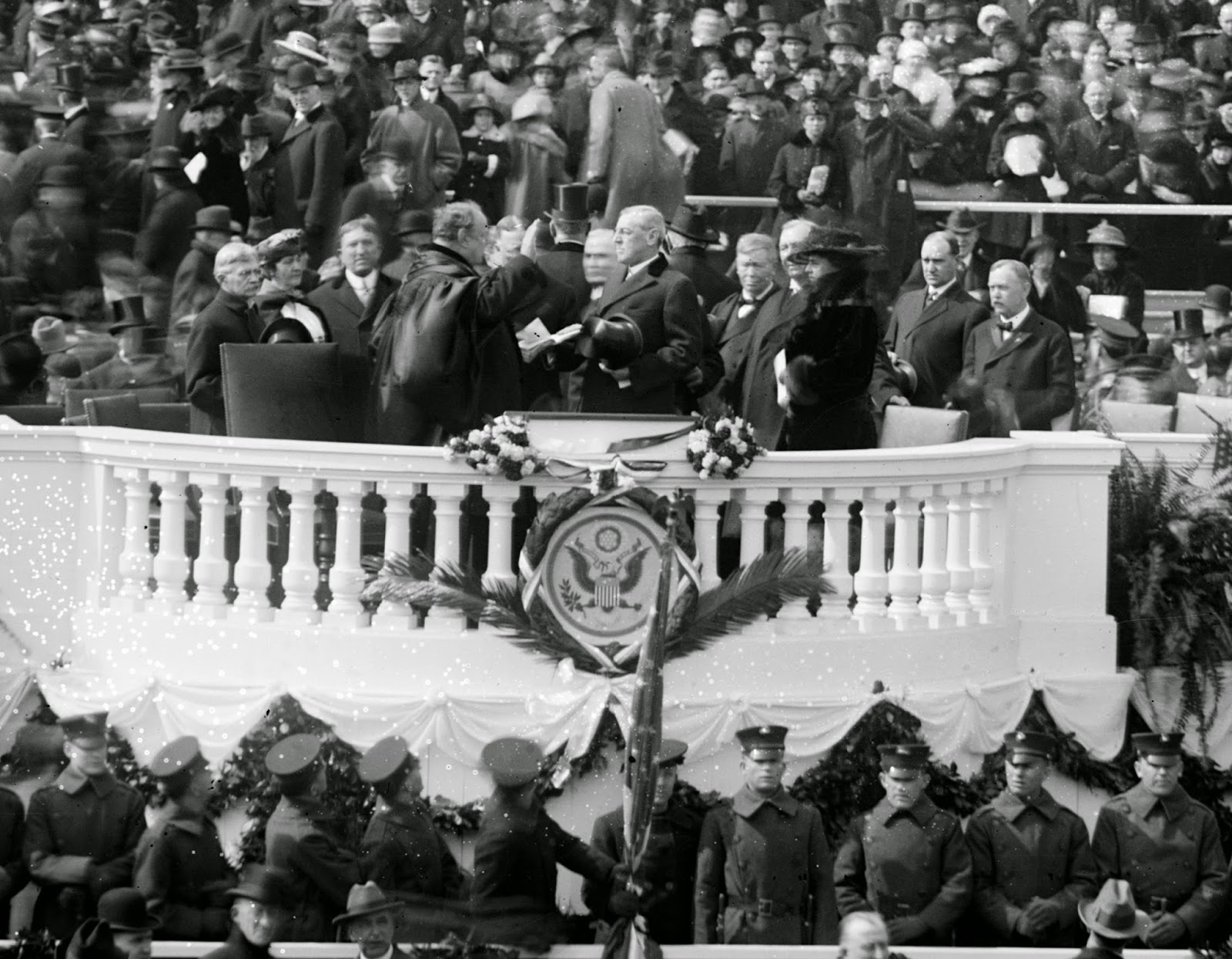
LAD #28: Wilson's First Inaugural Address
President Woodrow Wilson emphasizes the change that has occurred in the government. the government has been consumed by democrats, and although a previously underrepresented party going power; this did not mean that it would be coupled with a transition of ideals. The Democrats showed aspects of thing that were familiar and yet reinvigorated by new perspective. Wilson continues by praising the morally strong and listing the problems that needed to be addressed in his term. this included the need to get natural resources while being in the middle of a hostile competition in industry. This led to a chaos in the corporate sector, justice needed to be the new goal in government. The tariff violets the principles of taxation, a banking system was poor at adjusting to the changes of the time, industrial systems don't have there rights of labor and natural resources their top priority and the farmers haven't received the benefits of having a big business. The government was instrument of justice that would bring equity to social classes and other ares in which had been wronged. Wilson closes by asking for the help of humanity and not the party.
LAD #27: Clayton Anti-Trust Act
President Woodrow Wilson's administration passed the Clayton Anti-Trust Act in 1914. It was timed to prevent businesses from unlawfully controlling prices of goods and for the eliminations of unlawful businesses. A business could no longer discriminate based on "grade, quality or quantity" of the good sold or when they content to create a monopoly. This was only allowed when it was for competition among businesses. Granting rebates and other malpractices in order to eliminate competitors or decrease the value of the price from another company in hoes to create a monopoly is illegal. The act also outlaws the consolidation of companies for the purpose of lessening or eliminating competition that would lead to a monopoly in any line of commerce.
Monday, January 19, 2015
LAD #26 MLK's "I Have a Dream" Speech
During the March on Washington Matin Luther King Jr delivers his most powerful speech, "I have a Dream". dr. King beings his speech by talking about the accomplishments of Lincoln. "Four score d 5 years ago" President Lincoln passed the Emancipation Proclamation and yet African American are still not free, "languished in the corner of society" as they live in poverty and segregation. He goes back to the Founding Fathers has they have not delivered on the promised made in theDeclaration of Independence and the Constitution for African Americans are denied their rights. Now is the time to stop taking "tranquilizing drug of gradualism" but the time to "make real promises of Democracy". Dr. King states that its time African Americans become equal. He them emphasizes that their protest will not "degenerate into physical violence". Now is the time they will not look back, they will not stop until they are equal. He then acknowledged the people before him and all they have done. Its after this that he declares his famous dream, that one day the Unites states will uphold the ideas written in the constitution, a dream where men come together, where children "will not be judged by the color of their skins but the content of their character". With this dream as their faith they can soon stand together with white by their sides. When this happens, when freedom rings, all people Black, White, Jewish, Catholic or Protestant will be able to say "Free at last".
Friday, January 9, 2015
LAD #25 Dawes Severalty Act
The confutation of making and populating Indian Reservations was passed as Dawes Severalty Act in February 1887. Land was set aside for reservations where families could "own" land but it was still under the control of the US government. The alan was split among a family, a quarter to the head of the family, an eight to the people over 18 and a sixteenth to the people under 18 that were born before the act was passed. There were benefits to the land owners like extra grazing land. Lines were drawn out to eliminate conflict about how much land they received vs how much land they were promised. Indians could still acquire land if they applied to the local land office. Patents were handed out to ensure Indians owned that land for 25 years. The Secretary of Interior regulate the extensions; selling and purchasing of the land. Religious organizations in the region were given 160 aeries of land. Citizenship is offered to Indians who applied the act. This doesn't apply to Indians displaced under Jackson's administration along with Seneca Nation. The act does not include protection of the land being covered in railroads, telegraph lines and other public uses.
LAD #24 Cross of Gold
William Jennings Bryan combines his platform of Populist Party and bimetallism in his speech to the Democratic Convention. The Silver Democrats were there to discuss and public their issues to the common man, Bryan also explained the issue of money and how much of an impact it has. The Republicans were hostile but the Democrats weren't as hostile and he began to defend the Democrats and their stances.Bryan claims that because the use of gold the common man was being hurt and pushed aside, this was the Republicans stance. Bryan stressed tat everyman deserved equal protection under the law because everyman contributes equally to the nation. Bryan compares himself to Jackson and explains how banks are part of the government and not just a private business. Bryan then attacks the Republican Platform and how it contained many holes and unanswered promises. Bryan finally concludes with explaining his platform of Democratic and Populist ideas.
Subscribe to:
Posts (Atom)